
The contemporary art world finds itself at a crossroads where historical narratives, visual complexities, and preservation efforts converge. Recent developments reveal how institutions and artists grapple with the lasting impacts of past events in the context of today’s social dynamics, making it imperative for collectors and galleries to remain attuned to these evolving conversations.
The new exhibition at Somerset House shines a light on M.C. Escher’s intricate visual illusions that challenge perceptions and invite contemplation. As collectors delve into Escher’s legacy, the dialogues sparked by such works underline the importance of understanding the relationship between art and viewer interpretation. In juxtaposition, Helen Cammock’s removed film from the National Portrait Gallery illustrates a contentious moment in institutional critique, emphasizing how historical narratives can evoke strong reactions and necessitate thoughtful representation.
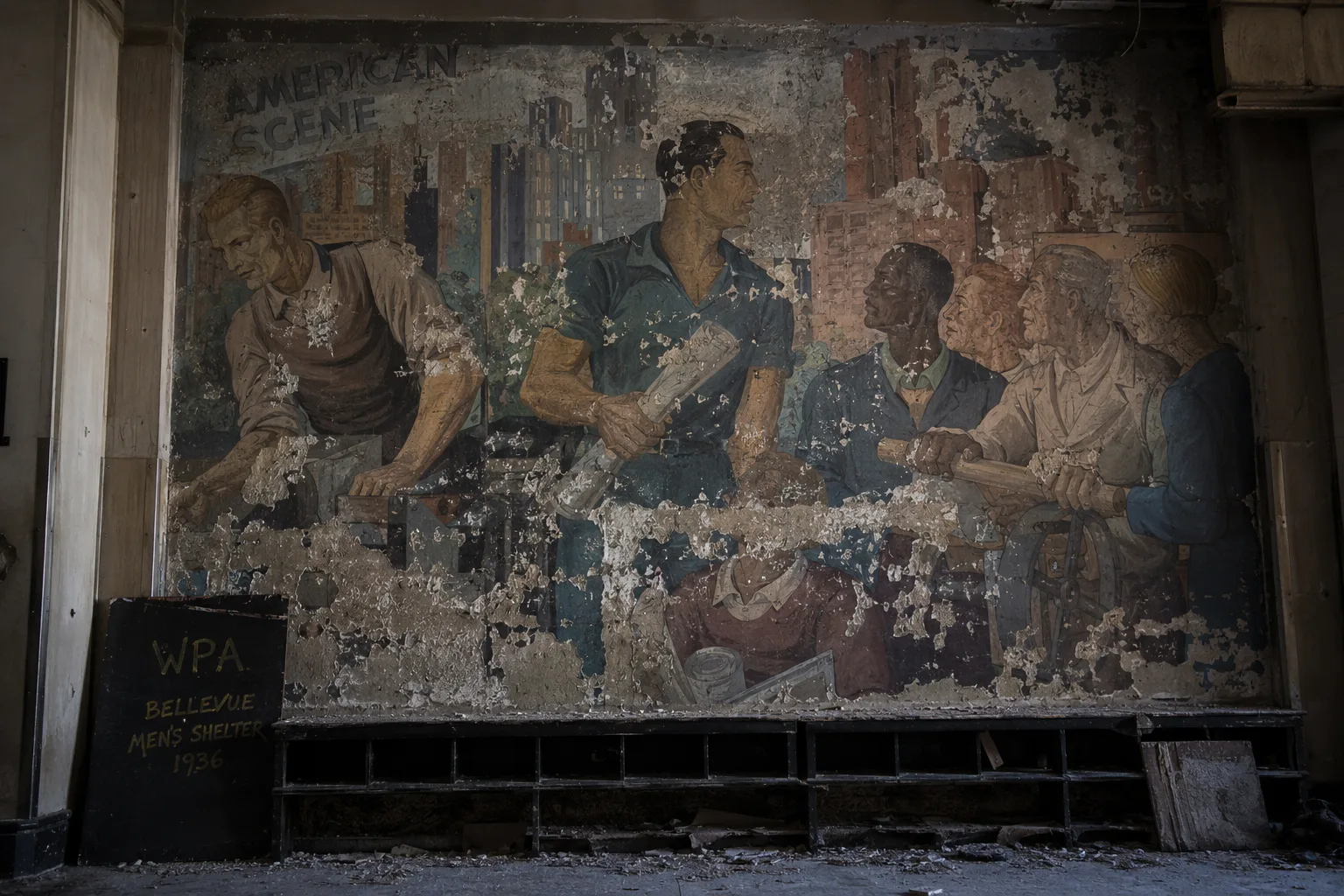
Additionally, the uncertainty surrounding the fate of historic murals following the closure of the Bellevue Men’s Shelter raises critical questions about urban art preservation. The stalled efforts to document these WPA murals serve as a reminder of the fragility of public art in the face of institutional changes. Collectors and institutions must advocate for preserving cultural artifacts that reflect our societal history, lest we lose the narratives encapsulated within these artistic legacies.
Sources
- Artnet – How Did M.C. Escher Develop His Mind-Bending, Paradoxical World?
- The Art Newspaper – Helen Cammock removes film criticising Winston Churchill from London’s National Portrait Gallery following complaint
- The Art Newspaper – Fate of historic murals uncertain following Manhattan homeless shelter’s closure